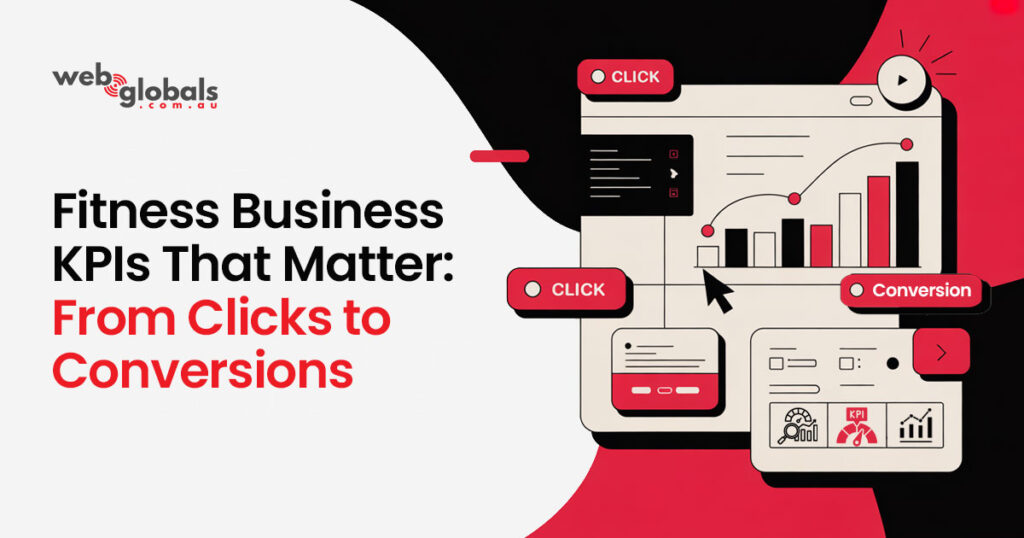
In the Australian fitness industry, the success of digital marketing is not solely measured by veneer metrics. Even though the traffic on the websites and the number of followers on social media give some preliminarily indicators, the tracking of key performance indicators that are directly linked to revenue generation and business viability is a must for sustainable growth. It is the knowledge of which metrics really count—and how to optimise them—that brings to light the difference between flourishing fitness companies and those that are having a hard time transforming their digital presence into real results.
Fitness studio owners are often among those who, rightfully or not, consider an increase in either website visits or social media impressions as a reason for celebration, nonetheless, not taking the time to analyse if these metrics really bring any benefits to the business. A fitness website with 10,000 monthly visitors and a 0.5% conversion rate produces fewer results than a site with 2,000 visitors converting at 3%. This very basic misconception regarding the effectiveness of digital marketing has been leading, every year, to Australian fitness businesses losing thousands of dollars in marketing that is no longer effective anyway.
The fitness industry’s competition among the competitors in the market is so fierce that it requires precise measurement and immediate optimisation. Non-specific marketing techniques which are based on a wide outreach rather than on an accurate targeting have been, and will always be, less effective compared to the use of targeted strategies that involve the generation of qualified leads and the optimisation of conversions.
The metric conveys the fraction of website visitors who perform the intended actions—booking trial classes, asking for consultations, or buying memberships—as a percentage. In the case of Aussie fitness companies, the standard conversion rates would range from 2-5% depending on the source of traffic and the complexity of the offer. The studios that always getting conversion rates over this range are most likely to have excellent user experience design, very good value propositions, and smooth booking processes.
The parameters that affect conversion rates are quick page loads, compatibility with mobile devices, clear calls-to-action, use of social proof, and ease of the booking process. Each of these factors requires a planned approach of testing and optimisation in order to produce the best results.
CPA is the abbreviation for the marketing investment necessary to win over one new customer. To get this number right, the total of all marketing expenses must be followed—advertising costs, creative development, platform fees, and staff time—all divided by the new member acquisitions in the timescale for which the metric is being calculated.
The fitness studios in Australia indicate an average CPA of $45 to $180 depending on the place, the degree of competition, and the market segment of the brand. The high-end boutique studios generally support the argument for higher cost of acquisition with superior lifetime value, while the gyms targeting average consumers rely on a volume-based model that allows for the costs of acquisition to be lower.
The comprehension of CPA trends in the past gives way to the making of strategic decisions related to the allocation of marketing channels, the optimisation of campaigns, and the forecasting of profits. Companies that do not have an accurate CPA measurement are not able to assess the return on investment from their marketing activities or to make the budget decisions based on the right information.
This indicator looks at the ratio of qualified leads to paying members eventually. Even though the typical rates in our industry are around 20-30%, the best studios can still raise their conversion rates to over 40% every time by applying systematic lead nurturing, strategic follow-up routines, and offering attractive introductory perks.
Many fitness companies lose their chance to convert new customers to a full-paying membership during the gap between lead generation and conversion, and this leads to substantial revenue leakage. Marketing automation, communication personalisation, and trial structuring are the three main categories that, if interpreted correctly and applied together, can improve the whole process significantly without any extra investment in marketing.
CLV shows the total revenue that one customer will bring in during the whole time they are your studio’s customer. For the fitness businesses in Australia, use a method of calculating CLV that takes into account the average membership length, the monthly fees, the sales of extra services, and the value of referrals contributed.
Usually, businesses that are in favour of retention and customer lifetime value (CLV), and not just acquisition metrics, tend to carry out retention strategies that include personalised programming, community building initiatives, member recognition programs, and taking proactive re-engagement measures for at-risk members.
The comprehended CLV justifies the investments in customer acquisition cost and provides the information necessary to make decisions regarding service development, pricing strategies, and the enhancement of customer experience. Studios with a CLV of over $2,000 can afford to spend more on acquisition than their competitors, dealing with lower customer lifetime values.
Various marketing channels lead to the generation of different quality leads having different costs. Google Ads generally bring in high-intent people who are actively looking for fitness solutions, whereas Facebook advertising is doing awareness among the audiences who might be interested. Instagram marketing talks about the community and culture, and local SEO takes the geo-specific searches.
By knowing the conversion rates, CPA, and member quality by acquisition channel, it is possible to allocate the budget intelligently. The fitness companies found out that the channels that produced the highest volume of inquiries also produced the lowest quality members, while the channels with fewer leads converted at significantly higher rates with better retention profiles.
Effective KPI tracking is possible only on a condition that one has an integrated system that connects website analytics, booking platforms, CRM software, and financial reporting. Such integration makes it possible for attributing very accurately, conducting very detailed performance analysis, and making data-driven decisions.
Partnerships between Australian fitness businesses and WebGlobals are extremely beneficial as they receive the whole digital solutions package that not only focuses on conversion optimisation, proper tracking, and effective performance analysis but also is very comprehensive. Our fitness-specific approach is not only able to solve the unique challenges posed by the industry, but also to provide measurable business growth through intelligent digital marketing strategies.
Is it time for you to optimise the performance of your fitness business? Get in touch with WebGlobals for a digital assessment that is comprehensive, has a wide coverage, and is concentrated on the metrics that impact your company’s income the most directly.
About WebGlobals: WebGlobals is an Australian fitness business, supplying digital marketing solutions tailored to fitness businesses in the whole of Australia, through a range of services such as web designing with conversion as a priority, monitoring, and marketing strategies based on data. To know more, visit webglobals.com.au.